
Opera Wars
Also: Jack Kerouac’s 121-foot-long scroll, poet voice, a new translation of “The Lives of the Caesars,” revisiting the death of Trotsky, and more.

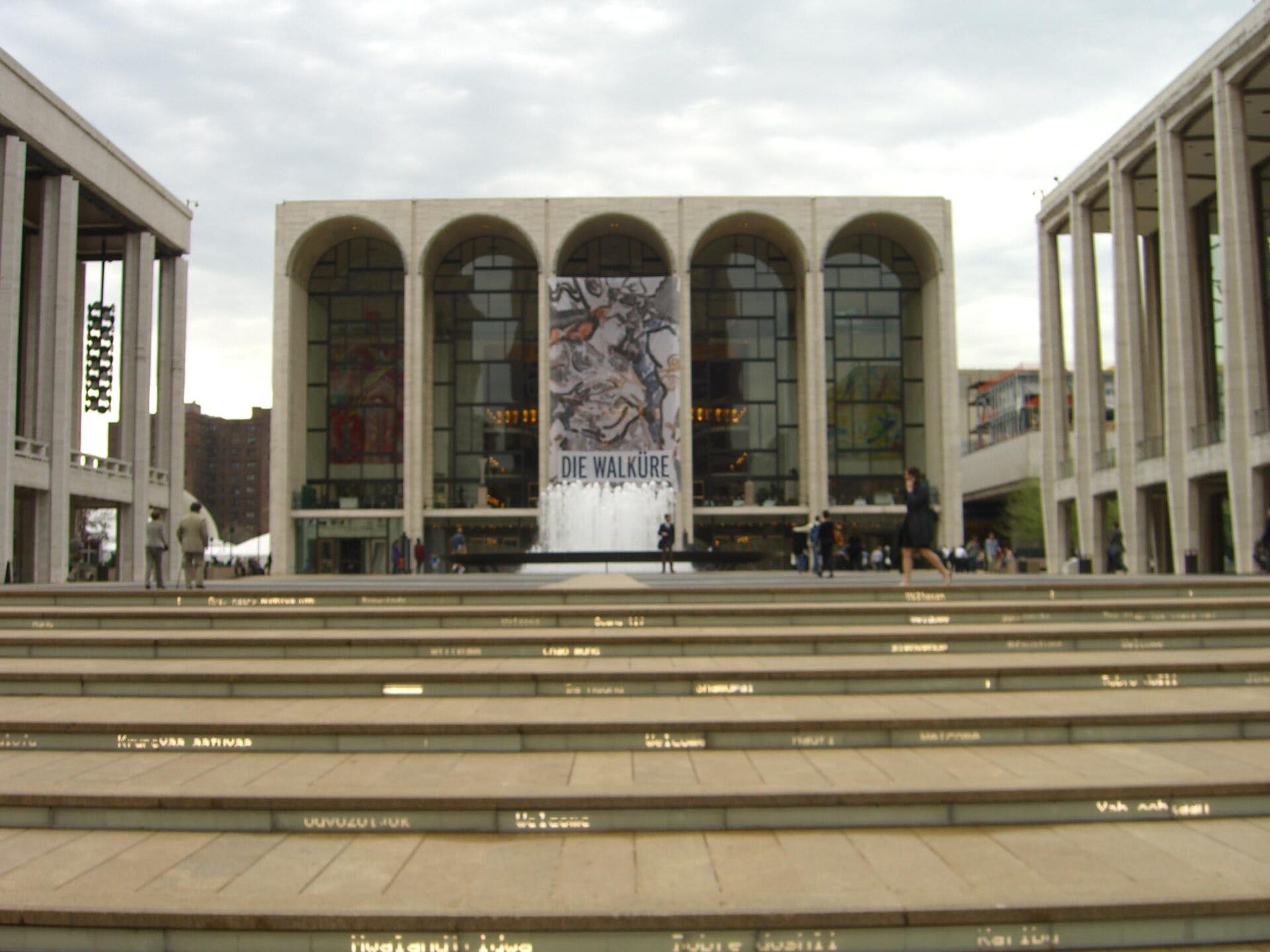
Good morning. In the New York Post, Kelly Jane Torrance argues that the Met Opera has been “ruined” by the pursuit of “politics and personalities”:
The Metropolitan Opera has been making headlines lately — for all the wrong reasons.
It’s not that the country’s oldest continuously operating opera company is seeing revived relevance and eager engagement. Quite the contrary.
The storied institution announced in the fall a deal with Saudi Arabia, said to be worth $200 million, to perform three weeks a year as the winter resident company at a $1.4 billion opera house opening in 2028.
It was a much-needed lifeline given that the Met has withdrawn $120 million from its endowment — more than a third of the fund — to cover costs since the COVID pandemic, but it also produced a brutal backlash in the cultural community, given the kingdom’s human-rights issues.
Then, as if to prove why the company’s having trouble raising money at home, audiences savaged its just-ended run of the Bizet classic “Carmen.”
More:
Directors will declare, “‘I’m gonna make the new feminist blah blah blah,’” the employee said. “And then you go see it, and none of that is there. All you get is this mostly inarticulate mess of political cliché.”
The insider scoffed, “The creator of the new ‘Carmen’ production was actually unaware as to how the opera ended, reaffirming that the Met continues to prioritize spectacle over substance in hiring decisions.”
Speaking of opera, Alexandra Wilson reviews Caitlin Vincent’s Opera Wars: Inside the World of Opera and the Battles for its Future:
Time and again, one finds oneself wondering whether many people in the arts world actually like art. The American opera singer turned director and librettist Caitlin Vincent admits in the introduction to her book that she struggles with this question, eventually concluding that ‘I do like opera. I love opera. But I also hate it.’ In career-related terms, her antipathy is understandable. The best bits of this book give us an insider’s view into the practical challenges that face the aspiring singer: years of training, young-artist programmes and competitions, all at huge cost with no guarantee of a big break. And with companies increasingly hiring on the basis of looks, or even social media following, no wonder many talented musicians walk away.
Vincent writes compellingly about all this, and I particularly enjoyed her detailed explanations of the inner workings of the audition and rehearsal process. She shares useful data about different regional funding models and writes clearly about how an opera company puts together a season. I wish she had called her book The Secret Life of an Opera Singer and focused on the internal workings of the industry and on exposing the harsh professional realities behind the glamorous façade.
Perhaps that wouldn’t have been commissioned in today’s risk-averse publishing world, in which arts books are considered a hard sell unless they take a fashionable political stance or the author has a celebrity ‘platform’. And so Vincent also undertakes a rather different sort of exposé: a ‘problematisation’ of opera itself. She argues that opera falls short as an art form for our times. Vincent tells us that she wants to ‘save’ the art form, though struggles to define precisely from what. She then proceeds to set out the ways in which opera ‘teems with issues’ that ‘exclude’ and ‘alienate’.
In other news, Eric Gibson reviews a new book about the rivalry between Michelangelo and Titian:
It sounds like the setup of a Tom Stoppard play: Two Renaissance titans—driven, ambitious, independently minded men recognized by their peers as the greatest artists of their time but separated by taste and geography—meet and wind up being influenced by each other.
The idea seems far-fetched because we tend to treat artists as isolated specimens. But it happened. In the first half of the 16th century, Michelangelo and Titian met—not once but twice. Each left his imprint on the work of the other. That story is now the subject of Michelangelo & Titian: A Tale of Rivalry & Genius, a lively, ambitious book by William E. Wallace, a professor of art history at Washington University in St. Louis and the country’s pre-eminent Michelangelo scholar.
Aaron Timms reviews Kyle Chayka’s Filterworld: How Algorithms Flattened Culture: “The main defect with Filterworld is diagnostic: A focus on Big Tech’s colonization of culture obscures both the additional forces driving stagnation and the way those forces interact with technology to make the social media platforms such a formidable obstacle to cultural renewal. Is tech responsible for everything? Hollywood, the MFA industry, and America’s unequal education system, which makes the kind of deep instruction needed to engage meaningfully with the canon today available to only the very rich, surely bear just as much responsibility for our intellectually flattened times as the warped incentives of the BookTok reel do.”
Thomas Jones reviews Tom Holland’s “sparkling” translation of Suetonius’s The Lives of the Caesars:
Julius Caesar ‘invaded Britain in the hope of finding pearls’. Caesar Augustus ‘wore platform shoes, to make him seem taller than he was’. Tiberius ‘was left-handed, with joints so strong that he could push a finger right through a firm, ripe apple’. Caligula ‘never learned to swim’. Claudius ‘would never let anything come between him and food and wine’. Nero had a ‘voice that was reedy and indistinct’. Galba ‘suffered so badly from arthritis ... that he could not bear to wear shoes for any length of time’. Otho ‘wore a hairpiece so skilfully fitted that no one would ever have known he was going bald’. Vitellius was ‘enormously tall’. Vespasian ‘did not let any fear of death stop him from cracking jokes’. Titus ‘was born ... in a dark and tiny room in a shabby building near the Septizonium’. Domitian would ‘spend hours every day on his own, during which time he would do nothing but catch flies and stab them with a well-sharpened pen’.
Suetonius, writing in the early second century, is notorious for the salacious details he shared of the depraved sex lives and sadistic murder sprees of the early Roman emperors, but there’s more to The Lives of the Caesars than the X-rated material. . . . As he surveys the lives of the twelve men who held sway over the Mediterranean and its hinterland for the best part of 150 years, from Julius Caesar’s defeat of Pompey at the battle of Pharsalus in 48 BC to the death of Domitian in 96 AD, Suetonius documents, along with their sex lives, their other appetites, their ancestry, their physical appearance, how they dressed, their military records, their spending habits, their building projects, the games they put on, the speeches they made, their religious practices, their handling of the grain supply, their welfare provision, their dispensing of justice, their parties, their marriages, their friendships, their deaths – and any other interesting morsels of information or rumour he happens to have turned up in the course of his researches.
The effect is cumulative. Through a pile-up of detail, Suetonius explores the ways in which power was achieved (or seized), wielded, abused and lost by his subjects. He’s less interested in – or appears to have a weaker grasp of – wider historical currents than his contemporary Tacitus: no one would look to Suetonius for a structural account of the decline of the Roman republic, or the complicated dynamics that operated between the imperial frontiers and the metropole, or the ambiguous role of the Senate under the principate. As Tom Holland puts it in the introduction to his sparkling new translation, Suetonius ‘wrote the lives of the Caesars, not their lives and times’. He proceeds ‘not chronologically but ordered by theme’, as he says in his Life of Augustus, and what he provides in each case isn’t so much a continuous narrative account as a complex if partial portrait of a man: incomplete, tendentious, unreliable, at times self-contradictory – but whose biography isn’t?
How mastering friction transformed the world: “The fundamental purpose of science is to view the world from a different perspective. In the age of modern science, however, in which each academic discipline represents a world in itself, this is hard to remember. The field of ‘tribology’ would appear to be a perfect example. But such opacity is merely a front for the study of friction. And, according to Jennifer R. Vail, friction is ‘the unsung hero of the material world’. Why? Because ‘the way we experience the world, whether through greater efficiency, flight or space exploration, has been shaped by our understanding of friction’.”

